Where we started
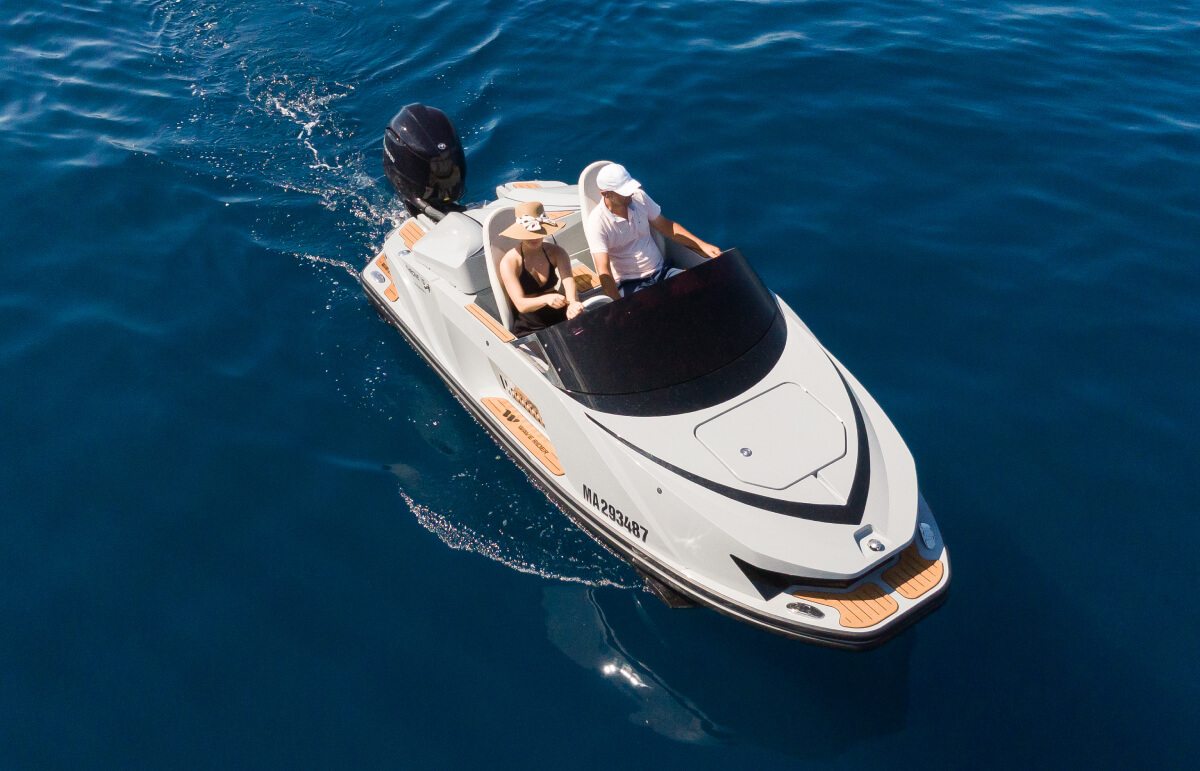
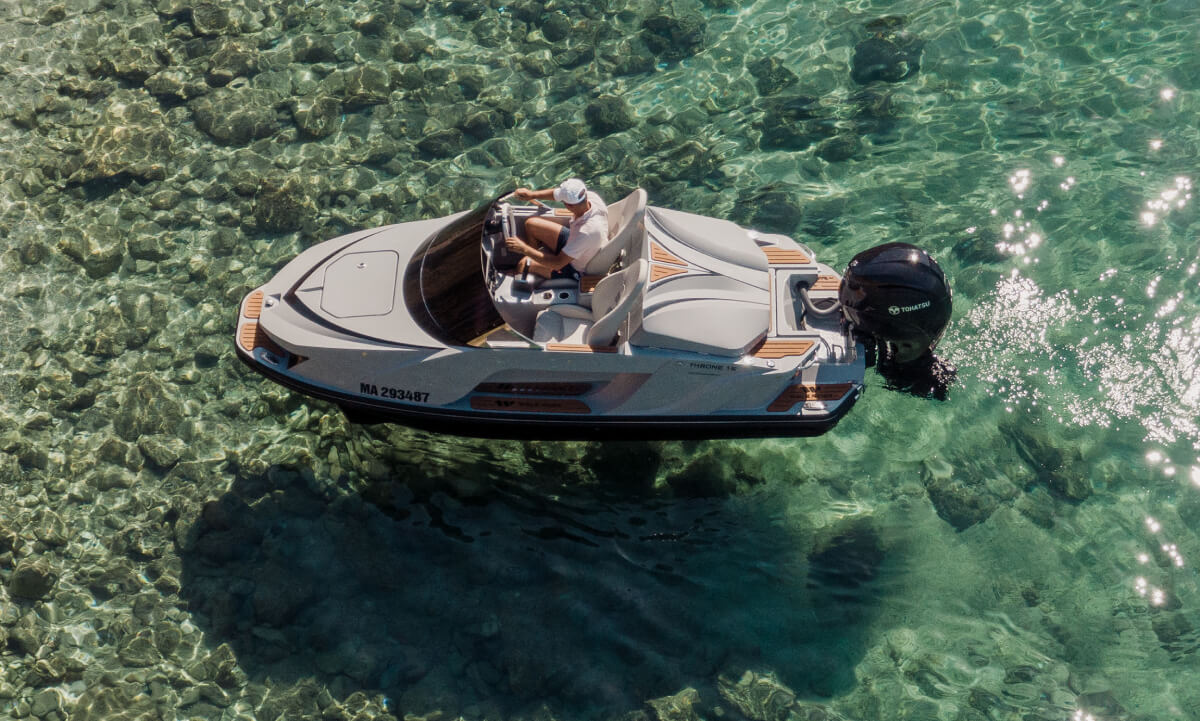
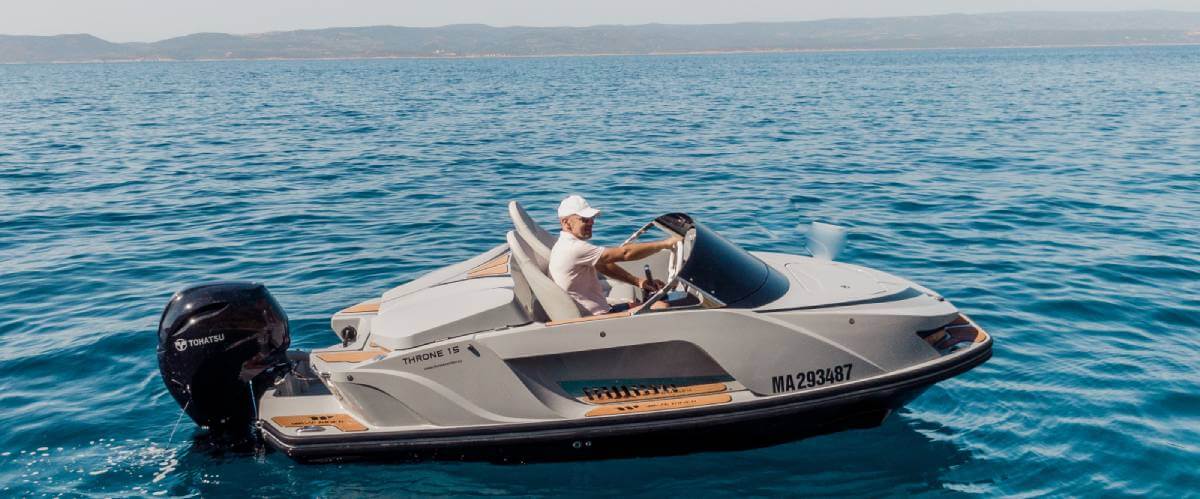
THRONE 15 is a small, fast jet ski, and this kind of vessel doesn’t forgive mistakes.
The client came to us with a clear goal: a two-person jet ski that can work for a full day on the water, riding between beaches and bays, but also swimming and sunbathing. And there was one key requirement: it had to look and feel completely different from what is already on the market.
They wanted recognizable lines inspired by fast cars, but not a copy. The idea was to capture that spirit and reshape it for water.
We received the base engineering model from the naval engineering team at Trival Engineering, who developed the underwater part and validated the hydrodynamics.
Our role was to build a complete exterior and interior on top of that technical foundation. We started from zero: first the proportions and overall concept, then the key lines, and only after that the deck and cockpit layout.
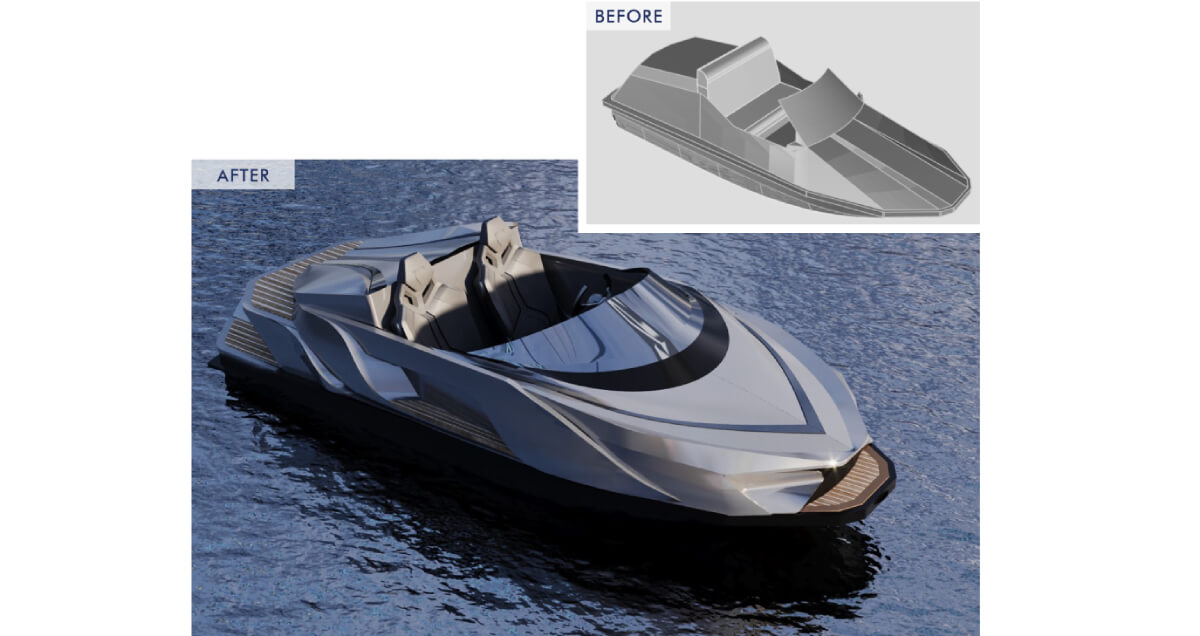
We first worked with what was fixed: hull geometry, propulsion type, and the real technical limits of such a small format. At 15 feet, there is no “extra” space. Every decision is immediately visible, especially the wrong ones.
The second starting point was the water itself. Waves became the inspiration, and we carried that idea through the topside profile and upper structure lines, looking for a flow that feels natural, not forced.
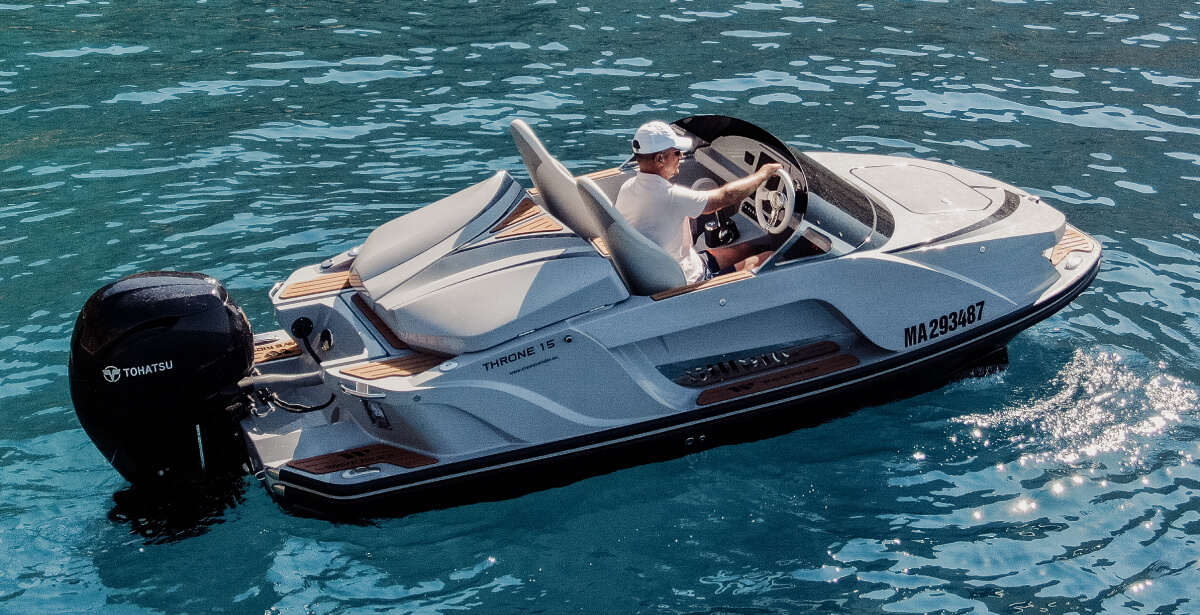
Exterior: fewer lines, stronger identity
The biggest risk with sporty vessels of this size is doing too much. Too many lines and exaggerated surfaces, so the silhouette feels tiring instead of fast. That’s why we focused on clear proportions and a few strong lines that carry the identity across the whole form. Details stayed functional and technical, without decorative tricks, so the boat feels refined, clean in geometry, and not overloaded.
Interior: compact, but functional
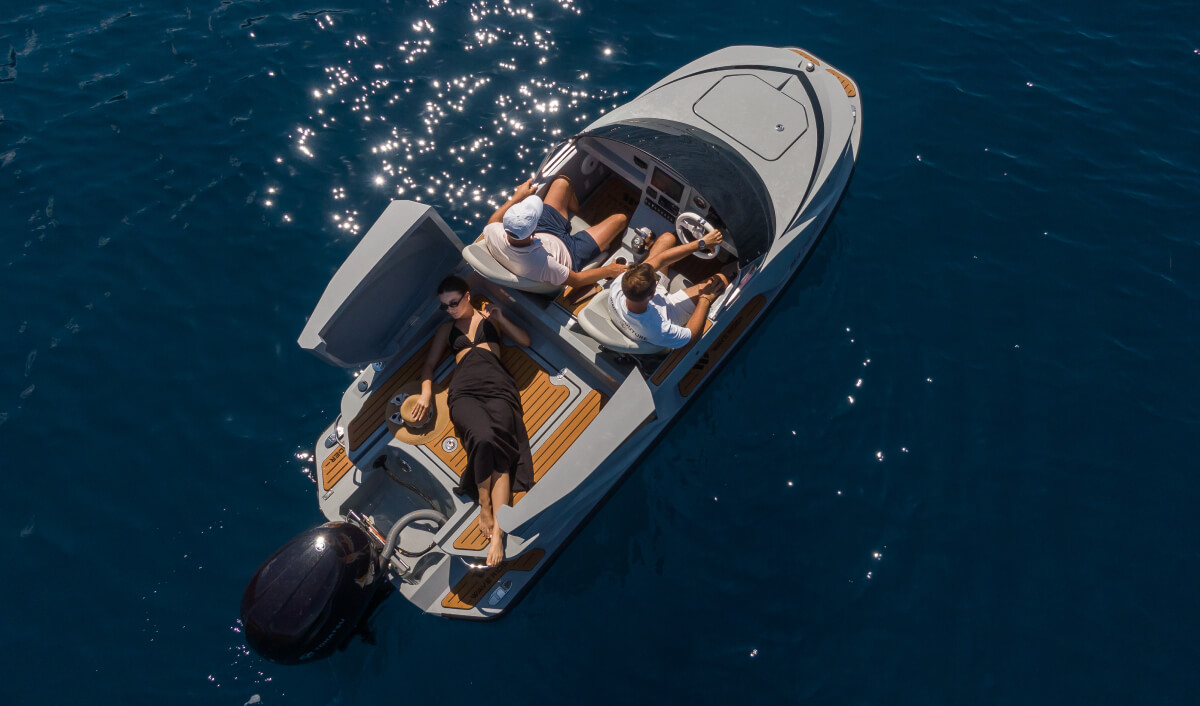
We paid special attention to the interior. For its size, THRONE 15 is exceptionally well equipped: an integrated shower, fridge, cup holders, handrails and steps for safe movement, a sunpad, and large storage volumes in both bow and stern.
The main challenge was to keep all functions clear and usable, without the feeling of clutter. We mapped movement paths, seating ergonomics, and reach zones, and we treated storage as something that must work in real life, not just “exist” in the layout, while keeping the cockpit and deck visually calm.
Our approach
This project is a good example of how we work: design that grows out of engineering. We did not change the technical platform. We refined and shaped it into something that can be built and used exactly as intended, with a clear identity and a comfortable interior.
If you’re developing a compact performance vessel and need the design to stay buildable from day one, we can support the process.