A few years ago, a client wanted to “just” move a set of built-in wardrobes during a refit to gain one extra cabin. Sounds simple, right? In reality, those wardrobes were hiding the main electrical panel and cable runs.
If we had not inspected the area before works started, that “small move” would have turned into delays, extra costs, and a lot of unnecessary stress. If you are a naval architect, captain, or shipyard manager, you know refits rarely fail because of “big ideas”. They fail because of small, hidden points nobody checked before the new solution was designed.
So here are two things you must verify if you want a refit without surprises.

1) Check the electrical runs and the main distribution panel
If you plan to keep existing cables, first map what falls inside the work zone: where the main cable bundles run, where the junction boxes are, and which wardrobes are actually “technical cupboards”. If you add new lights, sockets, or any new consumers, check immediately: capacity, routes, service loops, and access.
On older vessels, the as-built condition is almost never the same as drawings. And even when technical plans exist, later modifications are often not documented. That is why an on-site inspection before works is mandatory.
Our example from practice: On a 25 m motor yacht, the clients wanted an additional kids’ cabin with a bathroom. The idea was to convert part of the crew area and laundry into this new cabin. An inspection before any demolition saved us from a serious surprise: inside the built-in wardrobes that were planned for removal, we found the distribution panel and main cables. With small adjustments to the design, we kept the panel in its existing position and avoided electrical rework.
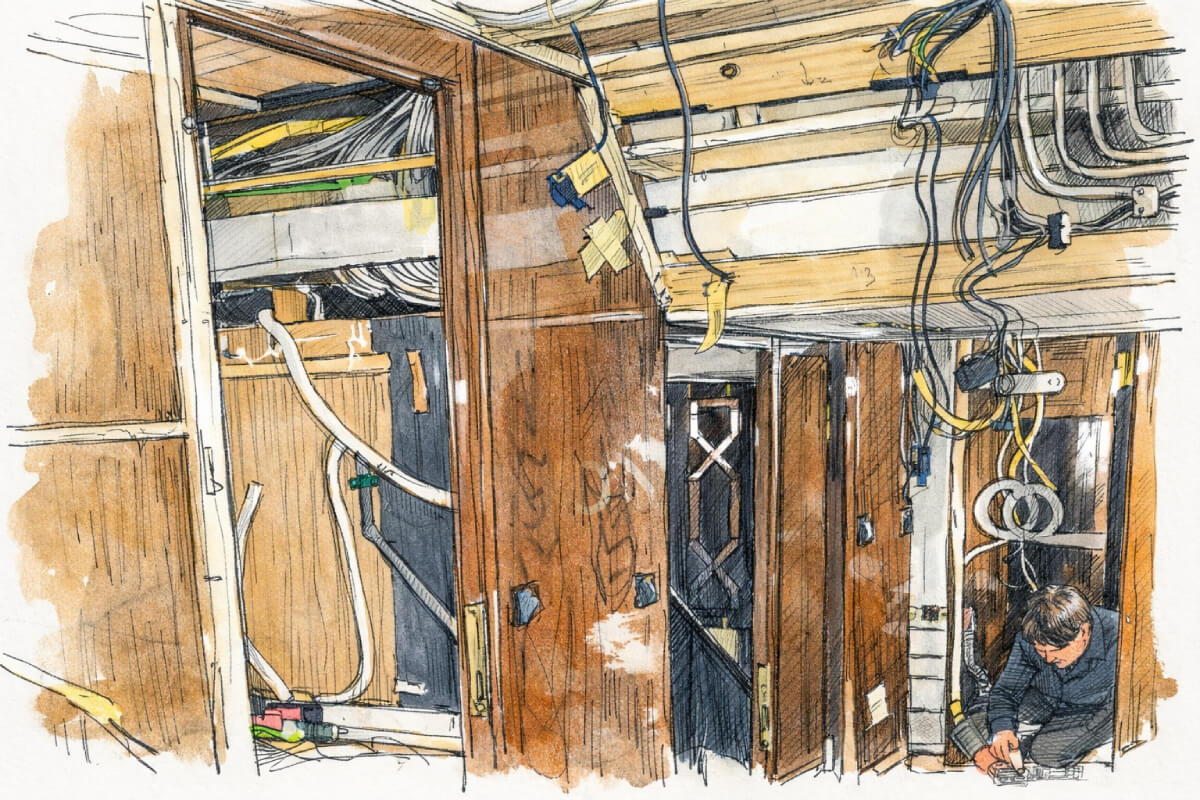
2) Check access to inspection hatches and service points
Below the floor and above the ceiling is the “life” of the yacht: bilge pumps, valves, tanks, HVAC, cables, speakers, junction boxes. A new layout is good only if it still gives access to everything that must be maintained. Easy servicing is not a “technical detail”. It is part of what makes a yacht easy to live with — and it is the key to fewer failures and less stress. If, after a refit, the yacht looks better but becomes harder to maintain, that is not a successful refit. Those decisions come back to the owner and the crew through cost and frustration. That is why, when designing a new interior, we always check access to all inspection openings.
In practice, this means: inspection doors must stay reachable without removing furniture; valves and tanks must not end up “buried” under fixed bases; and servicing filters and HVAC should be possible in one visit, without dismantling half of the interior.
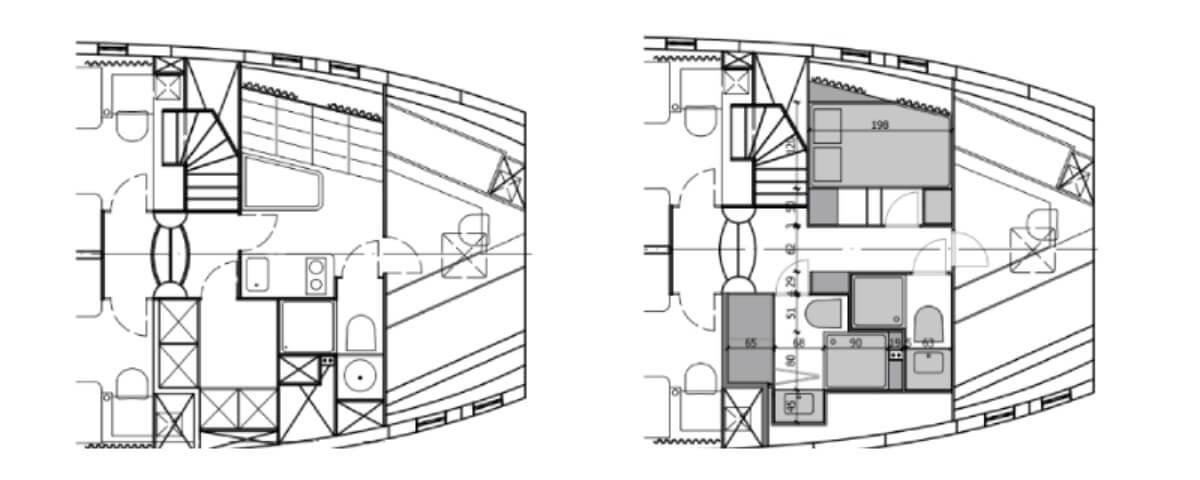
Our example from practice: Salt & Water team was involved in a refit where clients wanted to redesign the existing master bathroom. Once we checked on site what sits below the bathroom and how the systems are arranged, it became clear the desired plan was not realistic, the new solution would have required relocating the fuel tanks. In that sense, the fuel tanks set the real limits of the space and defined what could actually move.
The new layout came from that constraint: we designed around the existing tank positions instead of forcing a solution that would require moving them. First we set the functional boundaries and technical logic, and only then we shaped the bathroom layout and aesthetics within that footprint. Even with these clear technical limits, the final design still met the client’s goals and looked exactly how they wanted.
Refit reality: a plan without a buffer is not a plan
After situations like this, one thing becomes obvious: no matter how good the plan is, a refit is work with changing conditions. Behind panels and linings, there are often hidden systems, undocumented changes, and “surprises” you will not see until you open the boat. This doesn’t mean a refit is a bad choice. It’s the opposite.
Refit is a chance to adapt the yacht to real onboard habits and long-term maintenance, not only to the first impression. But to keep it “refit without drama”, the plan must be ready for what happens when the yacht is opened: a budget buffer for unplanned works, time for decisions made on site, and flexibility to adjust the solution when the as-built condition is not what existing drawings show.
If you are planning a refit or a layout change
If the project is still in preparation and you want to avoid fixes during work, check these points before the team starts demolition. If you need support, we can review the planned changes together, map the critical points, and confirm whether the solution is feasible and appropriate in real onboard conditions.
The Salt & Water team can follow the process from concept to technical development and execution coordination; or step in when the changes are already defined, to help the works run smoothly, without corrections “in the middle of the job.”