The end of the year was intense.
I visited several trade shows where, alongside the exhibition areas, there were constant panel discussions about innovation: new materials, technologies, sustainability, digital tools…Everything that is expected to be the “next big thing” in the yachting and cruising industry.
And while we were listening and talking about the future, one surface once again stayed completely out of focus.
Because while we are all looking forward, we often forget to look down.
Literally.
The largest continuous surface in any interior, the floor, is still one of the most overlooked topics in yacht design. It was mentioned the least, as every year. And yet, exactly there, in that silence, lies something that can change the experience of space far more than we usually expect.
The floor welcomes us first.
It follows every movement.
It influences how we feel, even though we rarely think about it.
Even when we talk about “quiet luxury”, calm interiors or good atmosphere, the floor usually stays in the background, until you come across a real example that clearly shows how important this surface can be.
That is why I decided to dedicate this text to floors.
To explain why they are one of the key, yet still underestimated, elements in every interior on the water.
The first step reveals the space as a whole
When you enter a yacht interior, your eyes usually go to the walls, the lighting, the furniture. These are the elements that dominate photographs and renderings, so it is natural that we notice them first.
But the body works differently.
Before you really see anything, you feel something.
The first contact with a space is never a wall.
It is always the floor.
This is the moment when your feet tell you more than you might expect: how stable the space feels, whether the material is warm or cold, whether the surface is soft or uneven. The body can clearly distinguish cold stone, warm wood, a carpet that absorbs sound, or a surface so precisely crafted that it feels like a fine piece of furniture.
This is where the perception of quality begins.
That is why a well-designed floor rarely tries to stand out. It connects elements, gives logic to the composition, and introduces you to the space before you are even aware of it.
It is the first quiet signal that the space has been carefully thought through; that someone considered user comfort, movement rhythm, everyday life on board, not only how the interior will look in photographs.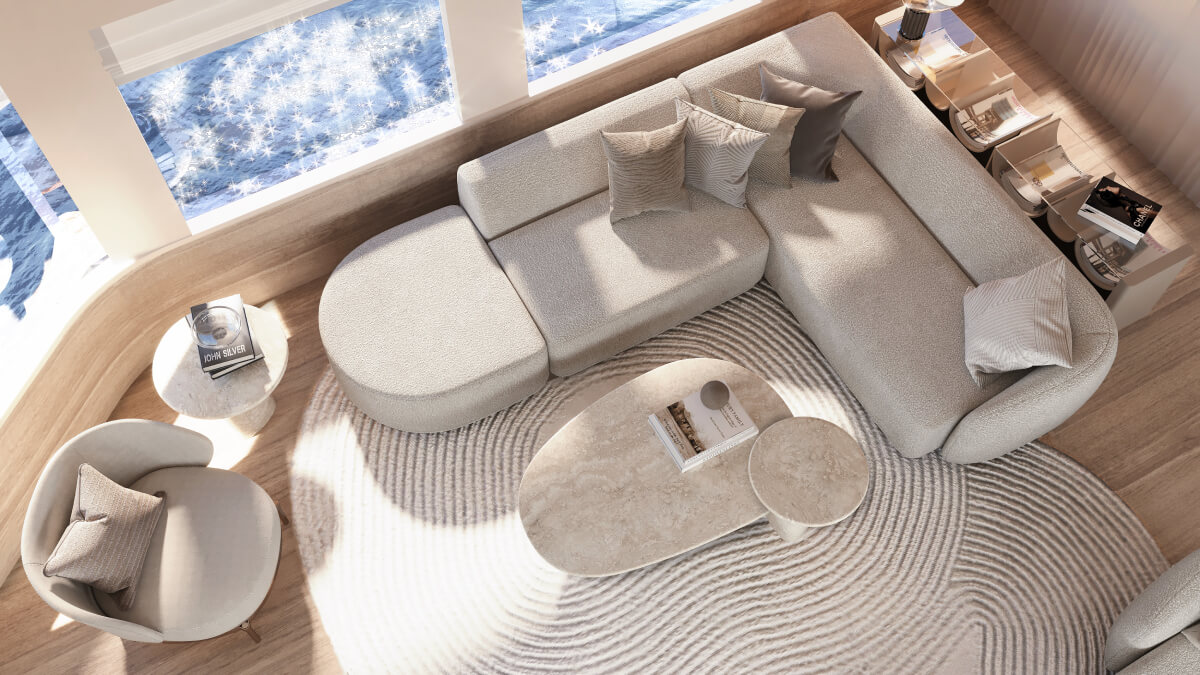
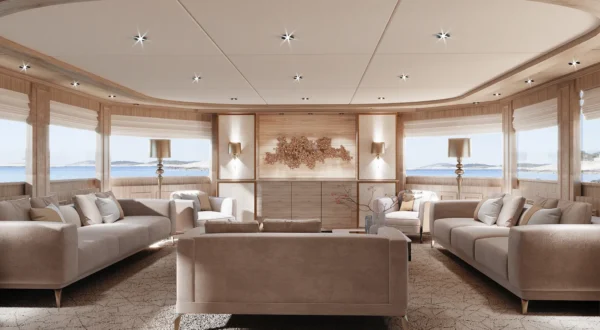
Salon project – design by Salt & Water Studio
Floors as maps of space
On a yacht, space is perceived differently than on land. Everything is in motion: people, light, the horizon. The floor is the only element that absorbs all these changes and translates them into a logic of movement.
That is why I often think of the floor as a map.
Lines in the wood texture, grain direction, contrast between zones, differences in surface finish, all of this guides the eye and the body subconsciously. Sometimes very subtly, with just a thin line or a gentle change in texture. Sometimes more clearly, through a detail that marks an entrance, a transition, or a boundary.
People often do not consciously notice it.
But they feel it.
If a corridor is long, the floor can visually shorten it through rhythm.
If a space is open, the floor can organize it without a single wall.
If a cabin is small, the right texture can visually open it up.
This is navigation that needs no explanation.
And this is why a good floor can solve more spatial issues than an additional wall, decoration, or complex piece of furniture. It is a quiet architect of the space, always present, never intrusive.
When we see the floor only as a functional surface, we miss the opportunity to fully define the interior. When we see it as a map, space starts to flow.
A quiet stage for everyday life
Everything that happens on a yacht is inseparably connected to the floor.
Daily routines, crew rhythm, morning coffee, evenings with friends, cabin preparation, stepping in from the deck, quiet moments before sleep – all of it takes place on this surface.
That is why I like to think of the floor as a stage.
Walls can be perfect, lighting precisely tuned, but if the floor disrupts the rhythm of the space, everything above it feels less stable. When the floor is well thought through, everything else feels clearer, calmer, more balanced.
It is a stage that does not ask for applause. It does not try to be the main role. But without it, nothing would really work.
That is why I appreciate well-crafted inlay floors or textured carpets, not as decoration, but because they add depth, rhythm, and a subtle play of light and shadow. They create a setting where life can unfold naturally, without resistance and without sharp edges.
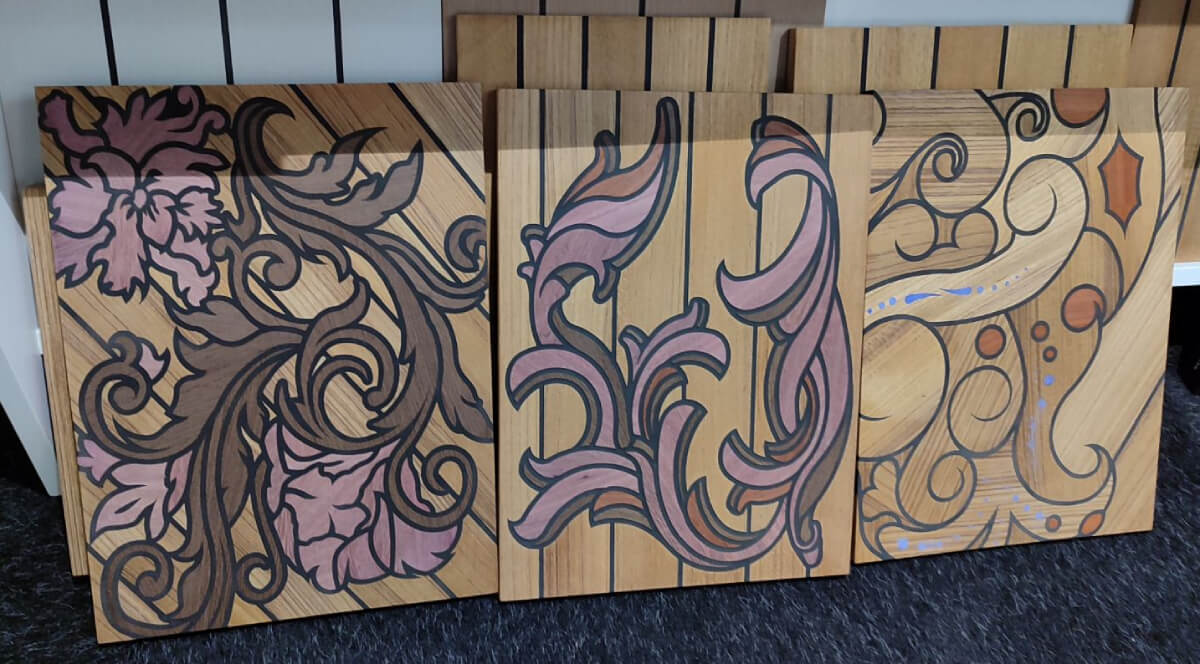
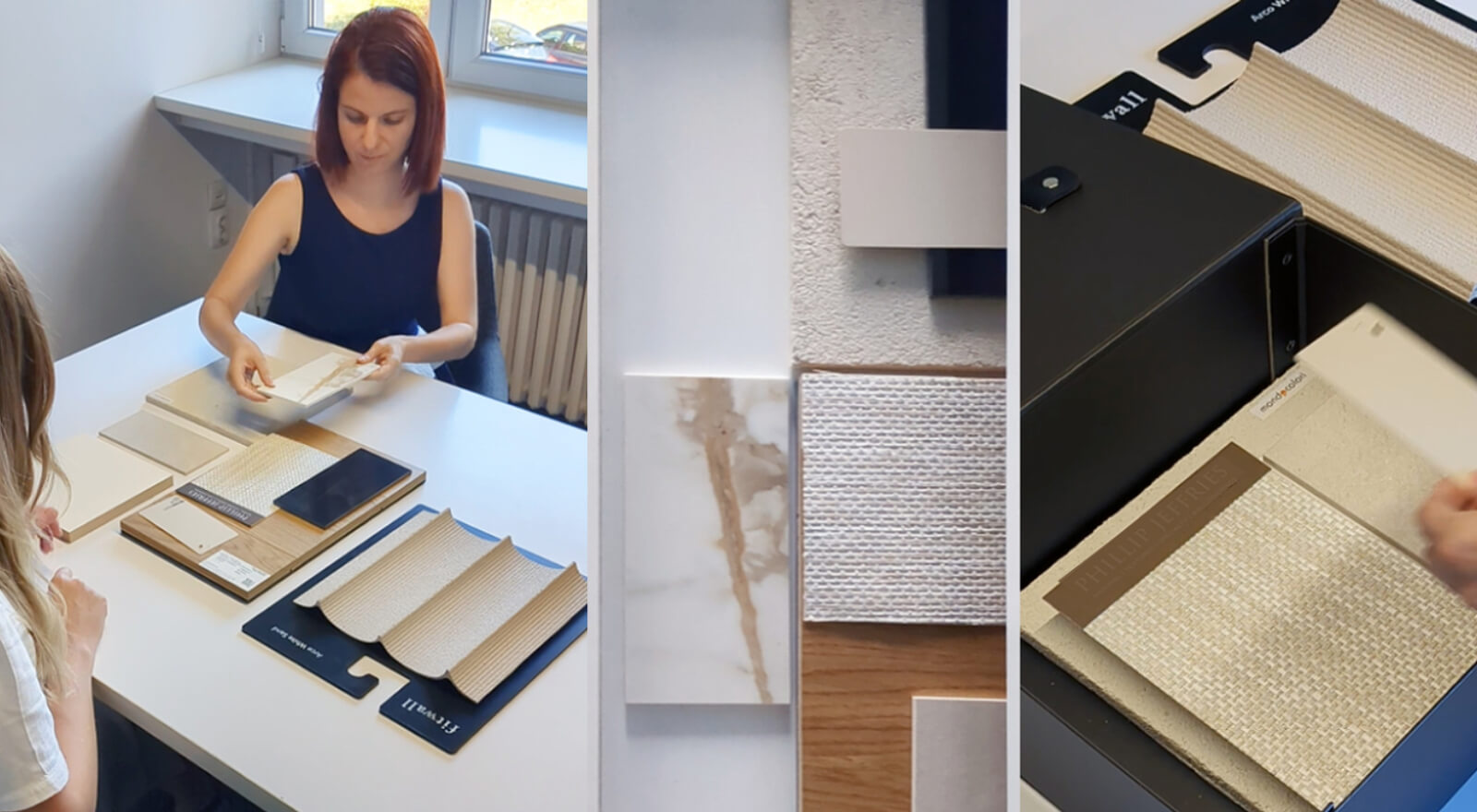
Exceptional floor samples I saw at METSTRADE
The one element you cannot avoid
In an interior, there are many things you can ignore.
Walls can go unnoticed. Ceilings even more easily. Furniture can be bypassed or replaced.
But the floor is the only element you are in constant contact with, whether you want it or not.
It carries you. It slows you down. It gives stability. Or takes it away.
That is why it is the first place where you feel when something is wrong: when it creaks, vibrates, feels too cold, too slippery, or lacks a clear movement logic. The body registers it long before the mind starts analysing it.
And this is the key point: a bad floor is felt immediately. A good floor quietly does its job.
It does not need to be striking to be valuable. Quite the opposite.
The best floors are those that give a sense that the space can breathe, that movement feels natural, that everything is in balance.
Maybe that is why they remain underestimated.
They do not ask for attention.
But they deserve it because no other element carries so much responsibility in everyday life on the water.